
Alban Alfalfa Haylage
Products Details
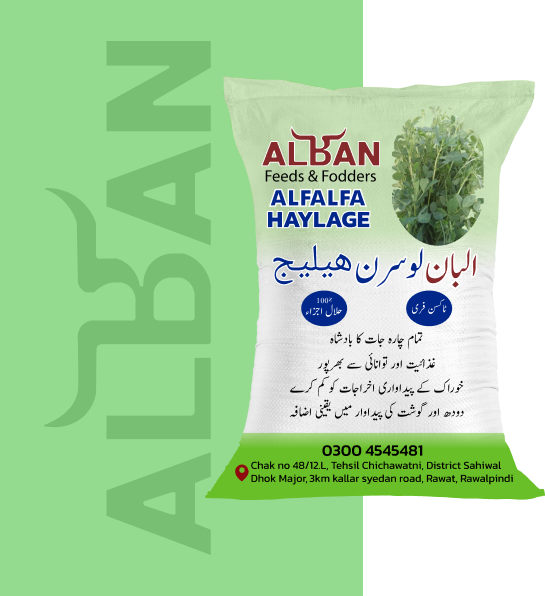
What is Alban Alfalfa Haylage?
Alfalfa is a legume, a nitrogen fixing plant that can extract nitrogen from the atmosphere and incorporate it into plant proteins. Other legumes include clovers, vetches, peas, beans, sainfoin and birds foot trefoil. Alfalfa is grown throughout the world and is capable of producing more than 1,800 pounds of protein per acre per year.
Here are some key things to know about Alfalfa:
Alfalfa as a Protein Source:
Alfalfa as an Energy Source:
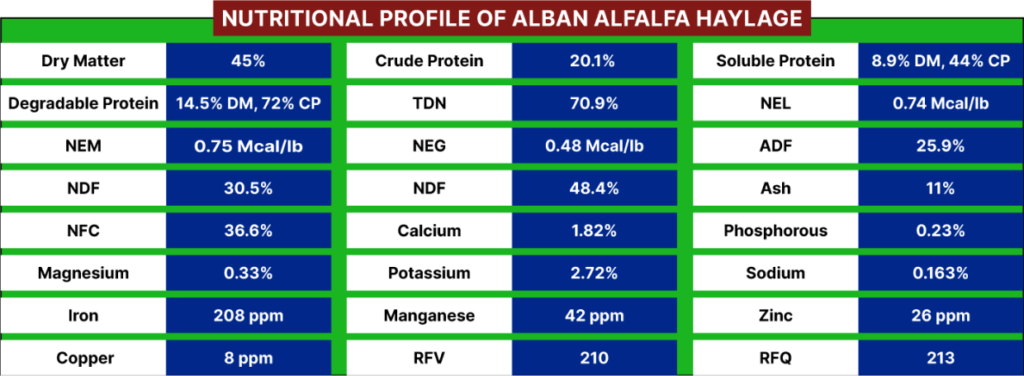
Alfalfa has one of the highest feeding values of forages. It has always been perceived as an excellent source of protein, but is sometimes underestimated as an energy source. A ton of alfalfa hay contains as much total digestible nutrient (TDN) as 25 bushels of corn (and as much protein as two-thirds ton of soybean meal). Beef cows are more likely to be fed rations more deficient in energy than in protein, particularly during the last trimester of pregnancy and postpartum (after calving). A beef cow needs high energy hay to regain body weight after calving, produce milk for her calf, and rebreed in 40 to 90 days after calving.
Some grass hays may be as high in digestible dry matter as alfalfa; however, those hays will be digested slower than alfalfa. As mentioned earlier, some alfalfa hay will pass through the rumen of a beef cow in about one-half the time required by grass hay (36 versus 70 hours). Therefore, animals fed alfalfa hay tend to gain faster, produce more milk, and maintain themselves in better condition than those fed other forages. This increased gain is primarily associated with an increase in intake, and the benefits would be negligible if the alfalfa was limit-fed (controlled intake).
Alfalfa as a Source of Minerals and Vitamins:
Vitamins:
Leafy, green alfalfa hay is unusually high in carotene, the precursor of vitamin A. Vitamin A is the most common beef cow vitamin deficiency. Good quality alfalfa hay can usually furnish all the vitamin A needs of beef animals. In addition to the many dietary functions of vitamin A, this vitamin may also have some therapeutic value, and it may be a contributing factor in preventing “shipping fever complex” and other disorders associated with animal stress. Because vitamin A will leach out of hays stored over extended periods of time, freshly harvested alfalfa is usually the best source of vitamin A.
Vitamin/Mineral interactions:
Alfalfa as a Fall Supplement
Rhodes grass hay is a high-quality forage for ruminants when grazed or harvested at an early stage of maturity. However, its nutritional value strongly decreases with maturity, especially after the first cut. Hay harvested at a later stage of maturity has a low protein content and a high fibre content, particularly in the stems, and it should be supplemented when fed to ruminants with nutritional requirements higher than those necessary for maintenance.
Available Packaging Sizes
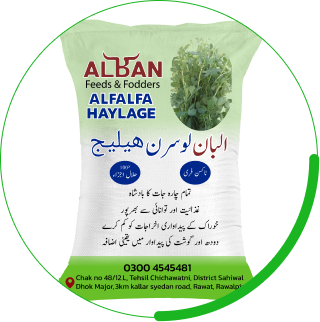
40 Kg Bag
Alban Alfalfa Haylage is available in 40KG Bag.
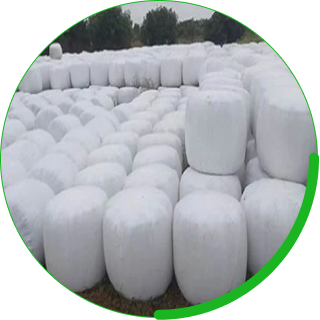
80 Kg Bale
Alban Alfalfa Haylage is available in 80KG Bag.
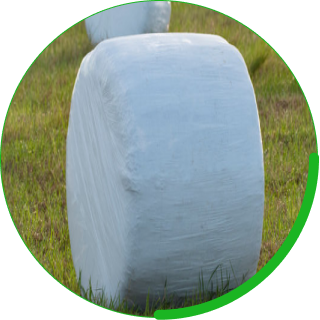
1 Ton Bale
Alban Alfalfa Haylage is available in 1 Ton Bag.
Our Products


